Governance, The Company


New West End Company is a company limited by guarantee.

Formal partnerships, and more specifically Business Improvement Districts (BIDs) can provide effective organisation models, which bring together the business community, both occupiers and owners, and the public authorities, to work together for the benefit of defined locations. 

BIDs are business-led and business-funded; formed to improve a defined commercial area. They are statutorily established once voted for by the majority of businesses or owners in an area and have a maximum term of five years before returning to their electorate to ask to be renewed. Over 300 BIDs currently operate across the UK. 

New West End Company is the BID proposer for both the Property and Occupier BIDs and is the legal entity that assuming successful ballots, will run the activities of the Occupier and Property BIDs for the designated BID area. The BID will be governed by New West End Company and, in keeping with regulations, will hold separate budget accountability and reporting for both BIDs. 

The Board, Steering and Management Groups

The New West End Company Board provides strategic leadership, sets the company’s long-term ambitions, and ensures strong corporate governance. The Board oversees strategy, budget management, and performance monitoring, ensuring the BID continues to deliver tangible benefits for its members. The Board will consist of a maximum of 16 Non-Executive Directors including the Chair. The Board will meet at least three times per year and will include representatives from key sectors, ensuring a balance of occupier and property interests. All Non-Executive Directors will be appointed by the Board, with appointments subject to ratification.

Board Structure

The Strategic Board will continue to provide leadership and oversight, ensuring that the BID remains accountable, effective, and aligned with the interests of its members. The Board will consist of a minimum of ten members and will maintain a 50/50 split between occupiers and property owners.

• Retailers – at least 4 members (Can be owner/occupier businesses)

• Property Owners – at least 4 members (Including at least 1 office representative)

• Hotels – at least 1 member (Reflecting sector levy contribution and representation)

• Offices – at least 2 members (Ensuring dedicated office sector representation)

• Chair of the Strategic Board – appointed by the main Company Board, not required to be a BID levy payer. 

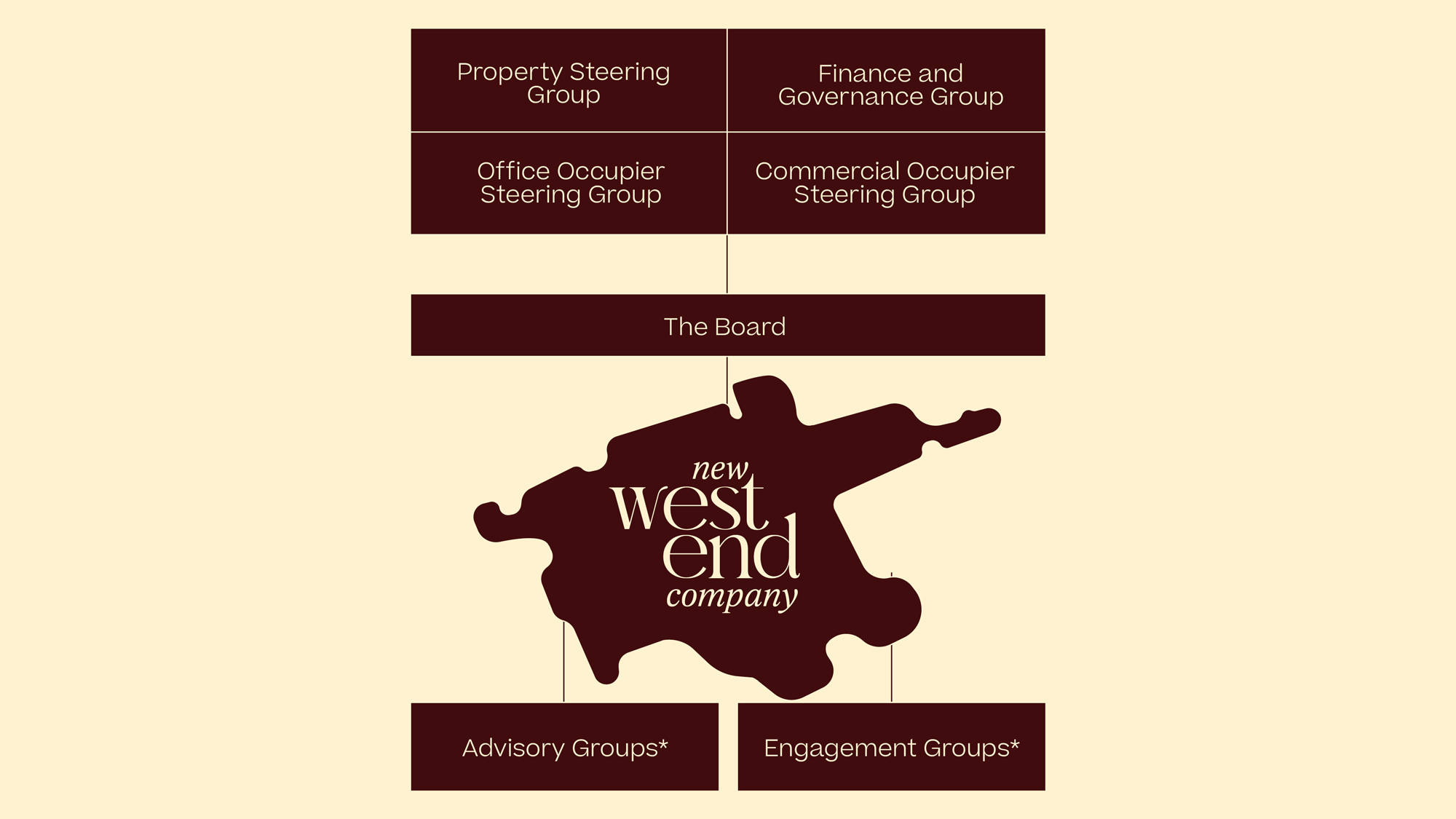
Steering Groups – Directly Feeding into the Board

The core Steering Groups make key recommendations for different business sectors, ensuring that member priorities directly influence the Board’s strategic direction.

• Finance & Governance Group, who meets three times a year

• Commercial Occupier Steering Group, who meets three times a year

• Office Occupier Steering Group, who meets three times a year

• Property Steering Group, who meets three times a year 

These groups guide BID strategy and act as the primary interface between members and Board-level decision-making.

Advisory Groups

To provide specialist insight and guidance, the BID will establish Advisory Groups, allowing for flexibility in responding to emerging challenges and opportunities. The frequency of these groups will be determined by the Executive team. Examples of these advisory groups are the following:

• Public Affairs Advisory Group 

• Sustainability Advisory Group 

• Oxford Street Advisory Group 

• Hotel Advisory Group

• F&B & Members Clubs Advisory Group 

• Galleries Advisory Group 

Note: New Advisory Groups may be established during the BID term as needed to support special projects and evolving priorities.

Engagement Groups

To ensure wider participation and input, the BID will facilitate broader engagement groups, focused on specific areas of interest.

Geographic Engagement:

• Bond Street & Mayfair

• Regent Street

• Oxford Street

Sector-Based Engagement:

• Security & Intelligence

• Marketing & Destination Strategy

• Sustainability & ESG Best Practice

Note: These groups will operate on a flexible, needs-based schedule rather than fixed frequency. 


This governance structure ensures:

• Balanced decision-making between occupiers and property owners.

• A direct link between businesses and board-level strategy.

• Sector-specific insights through Advisory & Steering Groups.

• A responsive and flexible governance model that adapts to emerging challenges.

By embedding strong governance and engagement, the BID will continue to drive security, investment, advocacy, and innovation—ensuring the West End remains a thriving, future-ready district.